Swapping a gas range for induction
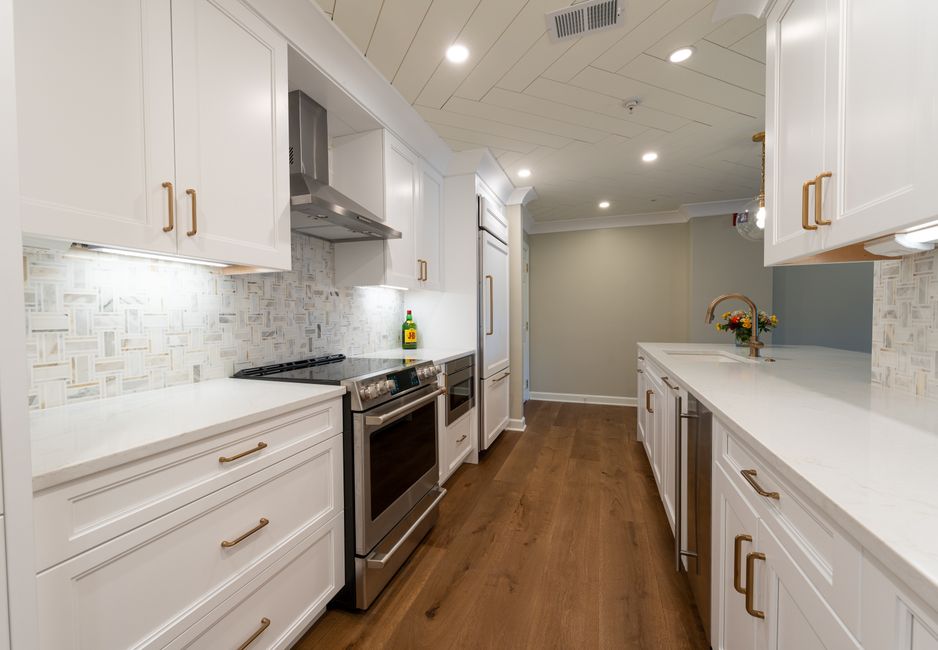
The induction range is supposed to slide into the same gap as the gas one. Usually the gap is fine and the wall behind it is not. A kitchen in Irvine, CA can swap fuels, and the plan laid out at irvine kitchen remodelers pink patisserie sets the order deliberately: the old gas line comes off first, then the new circuit goes in, and only then does the cabinet cutout get adjusted.
Shutting off the gas line properly
The gas supply behind the range does not just get turned down. It is shut at the valve, the pipe is cut back, and a cap is threaded on and tested for leaks with a bubble solution or a pressure test. A flex connector left dangling behind the drywall is a hazard that gets found years later, so the line is capped at a point that stays accessible.
The new circuit
An induction cooktop needs a high voltage circuit of its own, usually run with heavy gauge cable to a dedicated breaker. The panel needs two free adjacent slots and enough remaining capacity. Houses in Woodbridge and Turtle Rock built when gas was the default may have a panel with no spare room, which means a subpanel or a load calculation before the stove is even ordered.
Cutout and clearance changes
A drop-in induction cooktop wants a cutout size that differs from the gas unit it replaces, and the cabinet below needs ventilation space for the cooling fan underneath. A deep drawer under the cooktop can block that air path. The countertop may need to be reopened, and a stone countertop that is already installed will not forgive a cut that is a quarter inch off.
Cookware and the hood above
Induction only heats magnetic cookware, so aluminum and some stainless pans have to be replaced. The hood above no longer has to fight open flame, but it still has to clear steam and grease. Gas combustion byproducts go away with the fuel, which is one reason some owners in Irvine, CA choose the switch.
Inspection and permits
Pulling a gas line and adding a circuit both normally need a permit in Orange County. The inspector looks at the cap, the cable gauge, the breaker, and the receptacle or junction box. Doing the work in the right order lets one inspection cover both items rather than reopening the wall.